
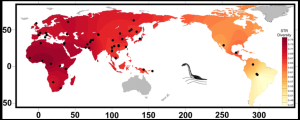
Origins of Human Diversity
and Possibly the “White Jesus”
History,Science and Bible
(C)2026 Taveau Creative Leadership. All rights reserved.
- Coming From A Biological, Scientific Perspective
Modern genetics shows:
-
All humans share 99.9% of the same DNA.
-
Scientists trace modern humanity back to Africa.
-
As small groups migrated to different climates, adaptations developed over thousands of years.
Skin Color
Skin tone is mainly determined by melanin:
-
High UV (near equator) → darker skin protects against sun damage.
-
Low UV (far north/south) → lighter skin helps produce vitamin D.
These changes are environmental adaptations, not separate creations.
Biologically speaking, there is one human race with surface-level variation.
2. Coming From A Biblical Perspective:
According to Scripture:
-
All humanity descends from Genesis 1–2: Adam and Eve.
-
After the Flood, all people descend from Noah’s sons: Shem, Ham, and Japheth (Genesis 9–10).
-
In Genesis 11, the Tower of Babel event caused language confusion and global scattering.
The “Table of Nations” in Genesis 10 describes early people groups spreading geographically. Over time:
-
Isolation
-
Climate
-
Culture
-
Intermarriage
… produced visible differences.
Biblically, all races share:
“And hath made of one blood all nations of men…” — Acts 17:26
So Scripture presents one human family, diversified after dispersion.
3. What “Race” Really Means
The modern concept of “race” is relatively recent (last few hundred years). Historically:
-
People identified by tribe, language, or nation
-
Not by skin color categories as we use today
Genetically, differences between so-called races are extremely small. There is often more genetic variation within a group than between groups.
4. So Where Did the Races Come From?
Short answer:
-
One original human family
-
Geographic separation
-
Environmental adaptation
-
Cultural development over thousands of years
What we call “races” are really extended family branches of the same human tree.
4. Coming from Taveau’s Perception: Why do most humans appear brown or dark?
Biologically:
-
Humanity originated in Africa.
-
Early humans had dark brown skin.
-
Dark skin protects against strong ultraviolet (UV) radiation.
-
Melanin acts like natural sunscreen.
Since humans lived in equatorial regions for most of history, darker skin was the default survival design.
So yes — globally speaking, most of the world historically has been brown-toned.
5. How did fair-skinned “Caucasians” develop?
When some human groups migrated north into Europe:
-
Sunlight (UV) became much weaker.
-
The body still needed to produce vitamin D.
-
Lighter skin allows more UV absorption.
Over thousands of years, genetic mutations that reduced melanin were selected because they helped survival in low-sun climates.
Fair skin is not a separate origin.
It is an environmental adaptation.
It likely developed between 6,000–20,000 years ago in northern populations.
Biologically speaking:
-
Darker skin is original.
-
Lighter skin is a later adaptation to geography.
6. What color were the Romans?
Biologically:
-
Humanity originated in Africa.
-
Early humans had dark brown skin.
-
Dark skin protects against strong ultraviolet (UV) radiation.
-
Melanin acts like natural sunscreen.
Since humans lived in equatorial regions for most of history, darker skin was the default survival design.
So yes — globally speaking, most of the world historically has been brown-toned.
7. Thinking of Modern Rome in Italy today : Were the Romans Caucasian
This is where modern imagination can mislead us.
The people of ancient Rome were Mediterranean.
That means:
-
Olive skin
-
Light brown
-
Tan
-
Some lighter, some darker
-
Dark hair common
The Roman Empire included:
-
North Africa
-
Middle East
-
Spain
-
Gaul (France)
-
Britain
So Romans were not a single uniform “white” group. Rome was multi-ethnic.
Also important:
Ancient statues look white today because the paint wore off. They were originally painted with realistic skin tones.
So when we picture Romans as pale northern Europeans — that image comes from later European art, not ancient reality.
8. A Simple Summary
-
Original humans: dark brown (equatorial origin)
-
Lighter skin: adaptation in low-sun regions
-
Romans: mostly Mediterranean olive to light brown, diverse across the empire
Modern racial categories are very recent. The ancient world thought in terms of tribe, language, and region — not “white/black” the way we do today.
9.What Did Jesus Christ look like historically?
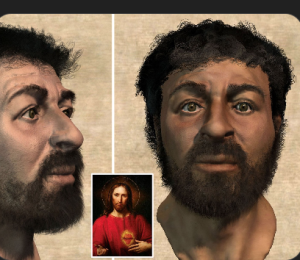
Jesus was a 1st-century Jewish man from Galilee, in Roman Judea.
That gives us strong historical clues.
Jesus Ethnic Background
Jesus was a Jew, born in Bethlehem and raised in Nazareth, in the region of Galilee.
That places Him among Middle Eastern Semitic people of the eastern Mediterranean.
He would not have looked like:
-
A pale northern European
-
A blue-eyed Scandinavian
-
A Renaissance Italian painting
Those images came much later in European church art.**
** Art was technically The Media of Those Ancient Days..like modern media spreads impressions, ideas, representations today
Jesus Likely Physical Features
Based on archaeology, skeletal remains, and population studies of 1st-century Judeans:
Jesus most likely had:
-
Olive to light brown skin
-
Dark brown eyes
-
Dark brown to black hair
-
Short, curly or wavy hair (not long flowing hair in most paintings)
-
A trimmed beard (Jewish men commonly wore beards)
-
Average height for the time: about 5’1″–5’5″
He would have looked like a typical Jewish man from the region — not especially tall, not unusually fair.
9. What Does the Bible Say?
Interestingly, Scripture gives almost no physical description.
In Isaiah 53:2 it says:
“He hath no form nor comeliness; and when we shall see him, there is no beauty that we should desire him.”
This suggests:
-
He did not stand out by unusual physical attractiveness.
-
Nothing about His appearance would have made crowds follow Him.
The focus was never His outward form, but His authority and presence.
10. Why Do We Picture Jesus as White?
European Christianity shaped visual art for centuries: (again art was the modern media of the ancient times)
-
Leonardo da Vinci painted a European-looking Jesus.
-
Medieval and Renaissance art reflected the local population.
Artists typically paint sacred figures in their own ethnic image.
African churches painted a darker Christ.
Asian churches painted an Asian-looking Christ.
Art reflects culture — not necessarily historical accuracy.
11. Theologically Important Point
The early church did not preserve a portrait of Jesus.
Why?
Because Christianity never centered on physical image worship.
His identity was grounded in:
-
His incarnation (God became flesh)
-
His teaching
-
His death and resurrection
-
His present reign
Not His facial features.
A Clear Summary
Historically, Jesus most likely looked like:
A Middle Eastern Jewish man of the 1st century:
-
Olive/light brown skin
-
Dark eyes
-
Dark hair
-
Average height
-
Strong from manual labor (carpenter/tekton background)
He would have blended into a crowd in modern Israel, Lebanon, or Palestine today far more easily than in Norway.
12. Did the Church Father’s Describe Jesus’ Appearance?
The Earliest Christian Writers (1st–3rd Century)
The earliest church fathers — like:
-
Justin Martyr
-
Irenaeus
-
Tertullian
— did not give a physical description of Jesus.
That silence is important.
They focused on:
-
His divinity
-
His humanity
-
His incarnation
-
His death and resurrection
Not His facial structure.
This suggests the early church did not consider physical appearance spiritually central.
Point: Origen (3rd Century)
Origen wrote that Jesus’ appearance may have seemed ordinary and even unimpressive.
He leaned on Isaiah 53:2:
“He hath no form nor comeliness…”
Origen suggested that Christ’s appearance could have varied in perception depending on who was looking at Him — meaning some may have seen Him as ordinary.
This reflects a theological reading, not a preserved portrait.
Point: Tertullian
Tertullian also referenced Isaiah 53 and suggested Jesus was not outwardly handsome or striking.
Again, this emphasizes humility, not glamour.
Point: Later Description (4th–5th Century and After)
Perhaps the “white Jesus beginnings” (?)
Much later, a document known as the “Letter of Lentulus” appeared (medieval period). It described Jesus as:
-
Having chestnut hair
-
Fair skin
-
A noble expression
But historians agree this document is not authentic and likely medieval fiction.
It reflects European imagination — not early testimony. And, as I stated, Europe produced the tremendous painters which were the “media” of that day. So if they were Caucasian and only regarded Jesus as “sent to the similar style of Christian” this is HOW it got spread.
Then I recall expansion in 1980’s of, TV and media leadership took it to a whole new level. (The blonde, blue eyed, USA Jesus, Jesus Christ Superstar and more)
13. How did the Christians View Ethnicity in the Roman World
Point: The Roman World Was Already Multi-Ethnic
The Roman Empire included:
-
Italians
-
Greeks
-
North Africans
-
Syrians
-
Jews
-
Egyptians
-
Celts
-
Iberians
-
Arabs
Cities like Antioch, Alexandria, Rome, and Ephesus were culturally mixed.
So ethnicity was visible — but it was not organized into modern “race categories.”
Identity was based on:
-
Citizenship
-
Language
-
Tribe
-
Region
-
Religion
Not skin color hierarchy the way modern race developed.
Point: What the New Testament Says
The early church made a radical claim.
In Galatians 3:28:
“There is neither Jew nor Greek… for ye are all one in Christ Jesus.”
And in Colossians 3:11:
“Where there is neither Greek nor Jew… barbarian, Scythian… but Christ is all, and in all.”
Notice:
Paul did not deny ethnic identity.
He denied ethnic superiority in Christ.
That was explosive in the Roman world.
Roman society ranked people:
-
Roman citizens above non-citizens
-
Free above slave
-
Male above female
Christianity introduced spiritual equality before God.
That was socially destabilizing — in a good way.
Point: Early Church Fathers on Ethnicity
Writers like:
-
Augustine of Hippo (North African)
-
Athanasius of Alexandria (Egyptian)
-
John Chrysostom (Syrian/Greek)
Came from different ethnic backgrounds.
The early church was not European-centered.
It was Mediterranean and Middle Eastern at first.
They emphasized:
Humanity shares one origin under Adam.
Redemption is for all nations.
Ethnicity was acknowledged — but not used to define spiritual rank.
14. How Racial Imagery Developed
Now we move forward in history.
Medieval Europe


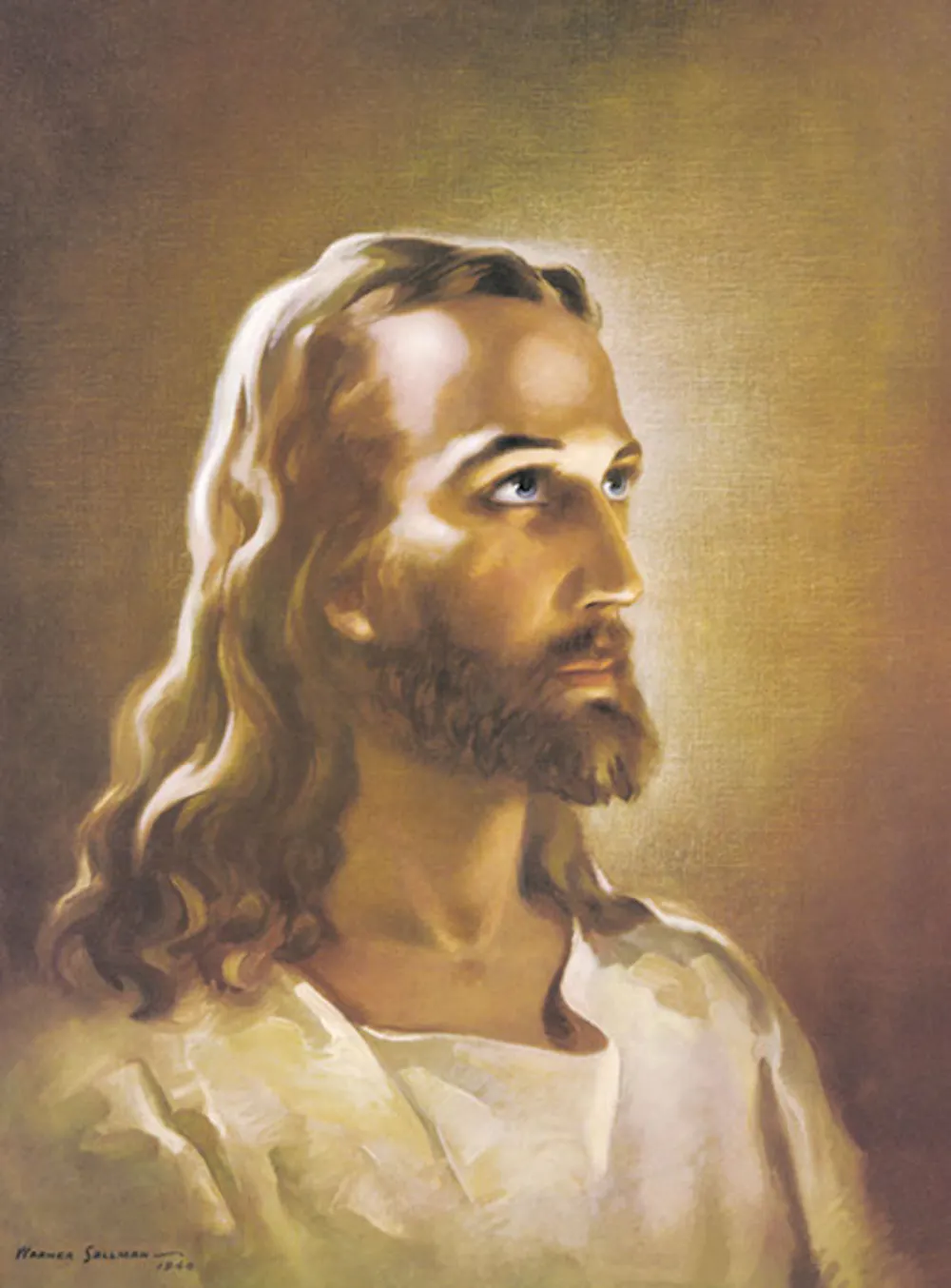
As Christianity spread into northern Europe:
(The Resident Media of the Times??)
Artists painted biblical figures in their own likeness.
So:
-
Italians painted Italian-looking Jesus.
-
Northern Europeans painted fair Jesus.
-
Ethiopians painted darker Christ.
-
Armenians painted Armenian features.
This was cultural localization — not racial ideology yet.
People naturally imagine sacred figures in familiar form.
Point: The Shift Toward “Race” (15th–18th Century)
The real change happened during:
-
European colonial expansion
-
The Atlantic slave trade
-
Enlightenment-era classification systems
Scholars like:
Johann Friedrich Blumenbach
Created categories like:
-
Caucasian
-
Mongolian
-
Ethiopian
-
American
-
Malay
These were pseudo-scientific groupings.
Skin tone became linked to hierarchy.
This is when “race” hardened into social ranking.
Point: Art and Power Intersect
As Europe gained global dominance:
-
White Jesus imagery became globally exported.
-
Colonial theology sometimes blended with racial superiority.
But that was political distortion — not apostolic teaching.
The early church never taught ethnic hierarchy.
Major Point: Important Distinction
Ancient Christianity:
-
Multi-ethnic
-
Not race-obsessed
-
Focused on unity in Christ
Modern racial systems:
-
Developed much later
-
Tied to empire, economics, and power
They are not the same thing.
Summary
Early Christians:
-
Lived in a diverse empire.
-
Acknowledged ethnicity.
-
Rejected spiritual hierarchy based on ethnicity.
-
Preached unity in Christ across tribal lines.
Race imagery:
-
Developed slowly in medieval art.
-
Hardened during colonial expansion.
-
Was influenced more by politics than Scripture.
Christian theology at its core teaches:
One human family.
One fallen race.
One Redeemer.
Every tribe and tongue.
The Eternal Righteous Perspective
Revelation 7:9 and the Biblical View of Ethnicity
Now we move from empire to eternity.
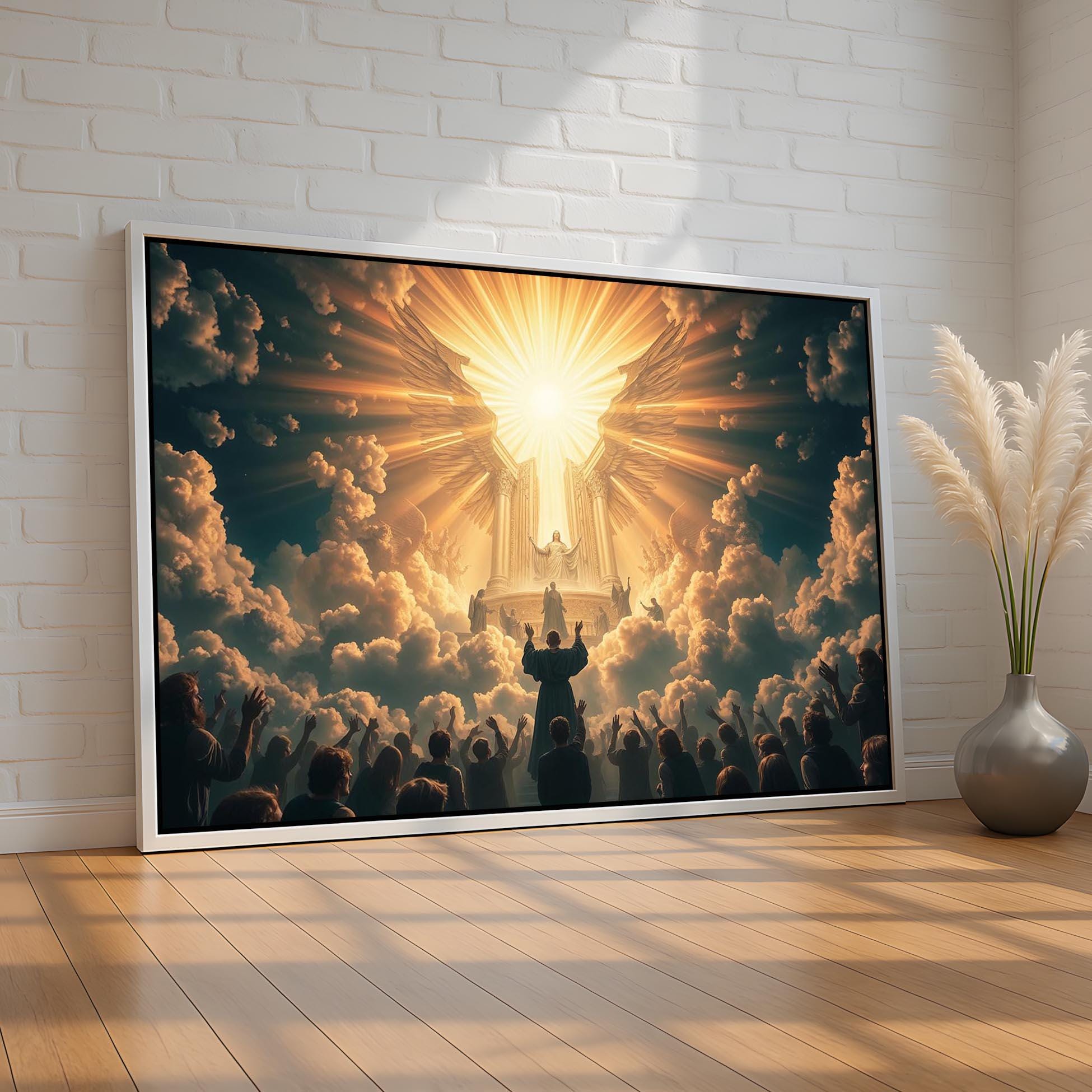
In Revelation 7:9:
“After this I beheld, and, lo, a great multitude, which no man could number, of all nations, and kindreds, and people, and tongues, stood before the throne…”
Notice what is preserved:
-
Nations
-
Kindreds (ethnic families)
-
Peoples
-
Languages
Heaven is not color-blind.
It is diversity-redeemed.
Ethnic distinctions are not erased.
They are unified in worship.
What This Means Theologically
The Bible teaches:
-
One human origin (Acts 17:26)
-
Diversity through dispersion (Genesis 11)
-
Redemption that gathers every group (Revelation 7)
Ethnicity is not sin.
Division and pride are sin.
God does not flatten cultures into sameness.
He redeems them.
Contrast With Modern Racial Systems
Modern racial systems often:
-
Rank groups
-
Politicize skin tone
-
Weaponize identity
- Accuse one another based on surface skin color origin
Revelation 7 shows:
-
No hierarchy
-
No dominance
-
No ethnic erasure
-
No superiority
Only shared worship of the Lamb. Summary
Deep Contrast Roman slavery View:
It’s a definite Transaction Core Root with out ART Core spiritual fruit. (this said based on the TCL Abiding Relationship Theology.com spiritual fruit training and observation)
-
Based on conquest and status, not race. It erases and devalues “humanity” and seems to regard atypical persons by their skin, age, look, size, status (Transaction core persons and leadership, styles) prequalify persons before they respect them and relate. They trade biased, accepted “types, stereotypes and demeans many human God formed people as “it’s” or “less than human” Brutal but not race-structured like modern slavery. Like right now.
Globalization surfaces to keep this going. -
Yet due to the intervention of Jesus Christ and ‘true” church, Christianity planted “real life respect and human value and equality into that system.
Revelation 7:9:
-
Shows redeemed diversity.
-
Ethnicity remains.
-
Unity does not mean uniformity.
-
Worship erases hierarchy, not identity.
15. Important Christian Scriptures:
GENESIS 10 — The Table of Nations (KJV)
This chapter records the spread of humanity after the Flood through the sons of Noah: Shem, Ham, and Japheth.
Genesis 10:1 (KJV)
Now these are the generations of the sons of Noah, Shem, Ham, and Japheth: and unto them were sons born after the flood.
Genesis 10:5 (Japheth line)
By these were the isles of the Gentiles divided in their lands; every one after his tongue, after their families, in their nations.
Notice the categories:
-
Tongue (language)
-
Families
-
Nations
Genesis 10:20 (Ham line)
These are the sons of Ham, after their families, after their tongues, in their countries, and in their nations.
Genesis 10:31 (Shem line)
These are the sons of Shem, after their families, after their tongues, in their lands, after their nations.
Genesis 10:32 (Summary Verse)
These are the families of the sons of Noah, after their generations, in their nations: and by these were the nations divided in the earth after the flood.
This establishes:
-
Families
-
Languages
-
Lands
-
Nations
Diversity is structured, but all descend from one family.
Next: GENESIS 11:9 (KJV) — The Scattering at Babel
Therefore is the name of it called Babel; because the LORD did there confound the language of all the earth: and from thence did the LORD scatter them abroad upon the face of all the earth.
Scattering …next Languages ….then Nations Next
This connects Genesis to the New Testament:
ACTS 17:26 (KJV) — One Blood
This connects Genesis to the New Testament:And hath made of one blood all nations of men for to dwell on all the face of the earth, and hath determined the times before appointed, and the bounds of their habitation;
One origin.
Many nations.
REVELATION 7 — The Gathering of the Nations (KJV)
Now we move from dispersion to redemption.
Revelation 7:9–10 (KJV)
After this I beheld, and, lo, a great multitude, which no man could number, of all nations, and kindreds, and people, and tongues, stood before the throne, and before the Lamb, clothed with white robes, and palms in their hands;
And cried with a loud voice, saying, Salvation to our God which sitteth upon the throne, and unto the Lamb.
Notice the identical categories:
Genesis 10:
-
Families
-
Tongues
-
Nations
Revelation 7:
-
Nations
-
Kindreds (families)
-
Peoples
-
Tongues
Revelation 7:13–14 (KJV)
And one of the elders answered, saying unto me, What are these which are arrayed in white robes? and whence came they?
And I said unto him, Sir, thou knowest. And he said to me, These are they which came out of great tribulation, and have washed their robes, and made them white in the blood of the Lamb.
Diversity remains.
But all are redeemed the same way.
The Biblical Arc
Genesis 10 → Nations divided
Genesis 11 → Languages scattered
Acts 17 → One blood origin
Revelation 7 → Nations gathered in worship
The Bible does not erase ethnicity.
It values, honors, unites and redeems it.
One origin.
Many nations.
God’s a master designer who loves unique human originals and celebrates deluxe variety!
An Extra A Closing Exegesis
Genesis 10 Line-by-Line Exegesis (KJV)
Genesis 10:1
KJV: “Now these are the generations of the sons of Noah, Shem, Ham, and Japheth: and unto them were sons born after the flood.”
Exegesis: This chapter is a family record after judgment and reset. The point is: humanity restarts from one family, then spreads.
Japheth Line (10:2–5)
10:2
KJV: “The sons of Japheth; Gomer, and Magog, and Madai, and Javan, and Tubal, and Meshech, and Tiras.”
Exegesis: “Sons” here means clans / founding lines. God is tracing origins of later peoples.
10:3
KJV: “And the sons of Gomer; Ashkenaz, and Riphath, and Togarmah.”
Exegesis: Sub-branches form. This is nations from families.
10:4
KJV: “And the sons of Javan; Elishah, and Tarshish, Kittim, and Dodanim.”
Exegesis: These names often connect to coastlands/islands and maritime expansion—peoples spreading by trade and settlement.
10:5
KJV: “By these were the isles of the Gentiles divided in their lands; every one after his tongue, after their families, in their nations.”
Exegesis: This is the first key pattern verse:
-
lands (geography)
-
tongue (language)
-
families (kin groups)
-
nations (people-groups)
Ethnicity is presented as family + language + land, not skin-tone hierarchy.
Ham Line (10:6–20)
10:6
KJV: “And the sons of Ham; Cush, and Mizraim, and Phut, and Canaan.”
Exegesis: Ham’s line becomes several major regional peoples.
10:7
KJV: “And the sons of Cush; Seba, and Havilah, and Sabtah, and Raamah, and Sabtecha: and the sons of Raamah; Sheba, and Dedan.”
Exegesis: Again: branching clans. Scripture is showing how tribes multiply.
10:8
KJV: “And Cush begat Nimrod: he began to be a mighty one in the earth.”
Exegesis: Nimrod is singled out—his story affects the direction of civilization.
10:9
KJV: “He was a mighty hunter before the LORD: wherefore it is said, Even as Nimrod the mighty hunter before the LORD.”
Exegesis: “Before the LORD” can mean “in the presence of” (not hidden). He becomes famous. The text hints: power can become a public identity.
10:10
KJV: “And the beginning of his kingdom was Babel, and Erech, and Accad, and Calneh, in the land of Shinar.”
Exegesis: First explicit kingdom-building. This sets up Genesis 11 (Babel). The Bible is tracing the rise of centralized power.
10:11
KJV: “Out of that land went forth Asshur, and builded Nineveh, and the city Rehoboth, and Calah,”
Exegesis: Expansion and city-building continues. Civilization spreads through people movements and political formation.
10:12
KJV: “And Resen between Nineveh and Calah: the same is a great city.”
Exegesis: The writer notes significance: large urban centers matter for later biblical history.
10:13
KJV: “And Mizraim begat Ludim, and Anamim, and Lehabim, and Naphtuhim,”
Exegesis: Multiple sub-peoples emerge. “Mizraim” is often associated with Egypt in later biblical usage.
10:14
KJV: “And Pathrusim, and Casluhim, (out of whom came Philistim,) and Caphtorim.”
Exegesis: The text links later-known groups (“Philistim/Philistines”) to earlier genealogical roots.
10:15
KJV: “And Canaan begat Sidon his firstborn, and Heth,”
Exegesis: Canaan’s line is highlighted because Israel will later encounter these peoples in the land.
10:16–18
KJV: Lists Jebusite, Amorite, Girgasite, Hivite, Arkite, Sinite, Arvadite, Zemarite, Hamathite…
Exegesis: This is a map of the future “Canaanite” world—real peoples, real boundaries, real conflicts later.
10:19
KJV: “And the border of the Canaanites was from Sidon… unto Gaza… unto Sodom, and Gomorrah… even unto Lasha.”
Exegesis: God anchors genealogy to geography. This is about where peoples lived, not abstract labels.
10:20
KJV: “These are the sons of Ham, after their families, after their tongues, in their countries, and in their nations.”
Exegesis: Second pattern verse: families → tongues → countries → nations. Diversity is orderly and traceable.
Shem Line (10:21–31)
10:21
KJV: “Unto Shem also… the father of all the children of Eber…”
Exegesis: Shem’s line matters for the later story of the Hebrews (“Eber” is a key ancestral marker in the biblical storyline).
10:22
KJV: “The children of Shem; Elam, and Asshur, and Arphaxad, and Lud, and Aram.”
Exegesis: This line will connect into major Near Eastern peoples and, through Arphaxad, toward Abraham.
10:23
KJV: “And the children of Aram; Uz, and Hul, and Gether, and Mash.”
Exegesis: More clans—Scripture is showing complexity without ranking.
10:24
KJV: “And Arphaxad begat Salah; and Salah begat Eber.”
Exegesis: The genealogy narrows: the covenant storyline is coming (Abraham will come through this broader stream).
10:25
KJV: “And unto Eber were born two sons: the name of one was Peleg… for in his days was the earth divided…”
Exegesis: “Divided” points toward major human dispersal—often connected to Babel’s scattering (made explicit in Genesis 11).
10:26–29
KJV: Joktan’s sons listed (Almodad… Sheba… Ophir… etc.).
Exegesis: These represent southern/eastern Arabian-related lines in many traditional readings—again: peoples and places.
10:30
KJV: “And their dwelling was from Mesha… unto Sephar…”
Exegesis: Geographic anchoring again: ethnicity is tied to family and place.
10:31
KJV: “These are the sons of Shem, after their families, after their tongues, in their lands, after their nations.”
Exegesis: Third pattern verse—same structure. God is emphasizing categories that later reappear in Revelation.
Chapter Summary (10:32)
10:32
KJV: “These are the families of the sons of Noah… and by these were the nations divided in the earth after the flood.”
Exegesis: This is the point of Genesis 10:
-
one human family
-
many families
-
many tongues
-
many nations
No supremacy is taught here—only origin, spread, and boundaries.
How Genesis 10 Connects to Unity in Christ Today
Genesis 10 explains how nations formed. The New Testament shows how nations are redeemed and united without being erased.
1) Same Categories Show Up in Heaven
Revelation 7:9 (KJV):
“After this I beheld… a great multitude… of all nations, and kindreds, and people, and tongues…”
Genesis 10 uses:
-
nations
-
families (kindreds)
-
tongues
-
lands
Revelation 7 shows those same categories gathered before the Lamb.
So unity in Christ is not “everyone becomes the same.” It is every people-group worshiping the same Savior.
2) Unity is Spiritual Family, Not Cultural Erasure
Galatians 3:28 (KJV):
“There is neither Jew nor Greek… for ye are all one in Christ Jesus.”
This does not mean Jews stop being Jews, or Greeks stop being Greeks.
It means: no ethnic group gets a higher rank in Christ.
3) The Cross Breaks Hostility
Ephesians 2:14 (KJV):
“For he is our peace, who hath made both one, and hath broken down the middle wall of partition between us;”
Christ doesn’t ignore differences; He removes hostility, superiority, and exclusion.
What Unity in Christ Looks Like Practically Today
-
Equal honor: no “first-class” and “second-class” Christians by background.
-
Truthful history: we don’t rewrite the past; we repent where needed and heal what was harmed.
-
Shared table: worship, leadership, communion, fellowship—without tokenism or suspicion.
-
Family language: believers relate as brothers and sisters, not tribes competing for power.
Submitted as a Christian Body of Christ Selah Food to Provoke Thought
(C)2026 Taveau Creative Leadership. All copyrights served, in conjunction with AI



























Recent Comments